Em 2026, a expressão I’m gagged, ou apenas gag, em português, tornou-se popular nas redes sociais. Leia a transcrição de um vídeo publicado pelo linguista Adam Aleksic sobre essa expressão.
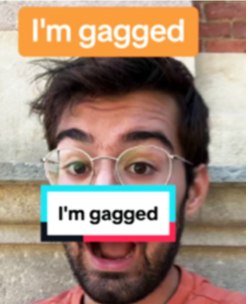 “We’re seeing an increase in the use of words and phrases like 'gag' and 'I'm gagged' and it shows how language spreads on social media: by straight white girls adopting what gay and black people are saying. That's what happened with the words 'slay', 'serve', and 'mother'. They came from the ballroom scene in the late 1980s, became viral on TikTok, and then everybody started saying it. The original appeal of these words was that they signaled in-group status, but they've lost that exclusivity. This is also why the word 'gagged' is now trending: it signals queer excitement (…). And it's going to be taken too, because we're in a never-ending cycle of marginalized groups creating slang as a tool of power to build community and shared identity, and then other people taking that slang to capitalize on its perceived coolness.”
(Adaptado de ALEKSIC, A. In: Instagram de @etymologynerd. Disponível em https://www.tiktok.com/@etymologynerd/video/7357723597768576298. Acesso em 27/05/2026.)
“We’re seeing an increase in the use of words and phrases like 'gag' and 'I'm gagged' and it shows how language spreads on social media: by straight white girls adopting what gay and black people are saying. That's what happened with the words 'slay', 'serve', and 'mother'. They came from the ballroom scene in the late 1980s, became viral on TikTok, and then everybody started saying it. The original appeal of these words was that they signaled in-group status, but they've lost that exclusivity. This is also why the word 'gagged' is now trending: it signals queer excitement (…). And it's going to be taken too, because we're in a never-ending cycle of marginalized groups creating slang as a tool of power to build community and shared identity, and then other people taking that slang to capitalize on its perceived coolness.”(Adaptado de ALEKSIC, A. In: Instagram de @etymologynerd. Disponível em https://www.tiktok.com/@etymologynerd/video/7357723597768576298. Acesso em 27/05/2026.)
Em sua análise, Aleksic
Explicação: Aleksic explica que palavras como “slay”, “serve” e “gagged” nasceram na cena ballroom, em grupos marginalizados, como gírias que sinalizam pertencimento (“in-group status”) e “constroem comunidade e identidade compartilhada”, e que depois são adotadas por outros e perdem a exclusividade. Ou seja, as gírias demarcam território e identidade cultural de um grupo, como diz a B. Ele não defende o direito de recusar a apropriação (C) e não fala de grupos dominantes buscando exclusividade (D): são eles que se apropriam das gírias.