O texto a seguir é parte de uma publicação acadêmica.
This fruit comes from a plant originating in the Amazon region in South America. Its popular name comes from a Tupi word which alludes to its red dye. Fruits grown from that plant are small, teardrop-shaped capsules covered by a non-smooth coating and malleable bristles that give them a fuzzy appearance. When they mature, their seeds can be used for body painting and protection of the skin against insect bites.
(Adaptado de FRANKLIN, V.A., et al. Aqueous extract from (…): antimicrobial, antioxidant, and healing activity. Disponível em https://pmc.ncbi.nlm.nih.gov/articles/PMC10194807/. Acesso em 13/05/2026.)
As alternativas contêm ilustrações de frutos amazônicos, retiradas da obra “Floresta na Boca”. Assinale aquela que corresponde à descrição do texto.
(Fonte das imagens: COELHO, B. Floresta na Boca: Amazônia: pessoas, paisagens e alimentos. São Paulo: Fósforo, 2025.)
-
A
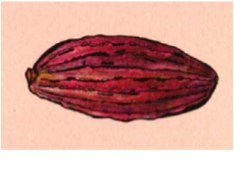
-
B
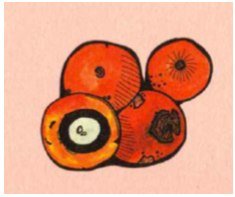
-
C
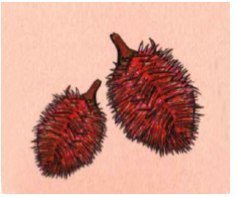 ✓
-
D
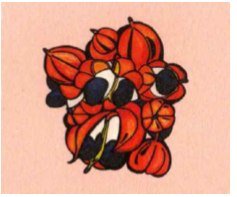
Explicação: O texto descreve cápsulas pequenas, em forma de gota, com revestimento áspero e cerdas maleáveis que lhe dão aparência felpuda, cujas sementes servem para pintura corporal (a planta é o urucum, cujo nome vem do tupi e alude ao corante vermelho). Esses traços (formato de gota e cerdas) só aparecem na ilustração da alternativa C. As outras mostram frutos lisos ou abertos, sem cerdas.